

If you have ever watched a busy site team prepare baffle boxes by hand, you will know how much time the detail can take.
Each box needs setting out, measuring, cutting, forming and checking before the team can install it. On a live project, with pressure on programme and limited space to work, that preparation can quickly eat into valuable installation time.
The team reaches for the mastic. Board offcuts build up. Repeated cutting wears through blades. Each cut adds dust to the work area. Time disappears.
And everyone still calls it “just a box”.
That is the mistake.
A baffle box might look simple, but when your team has dozens, hundreds or even thousands to prepare, it becomes a labour-heavy detail that can slow the job down.
This guide explains what a baffle box does, where contractors use it, and why more drylining teams now move the cutting and preparation offsite.
What is a baffle box?
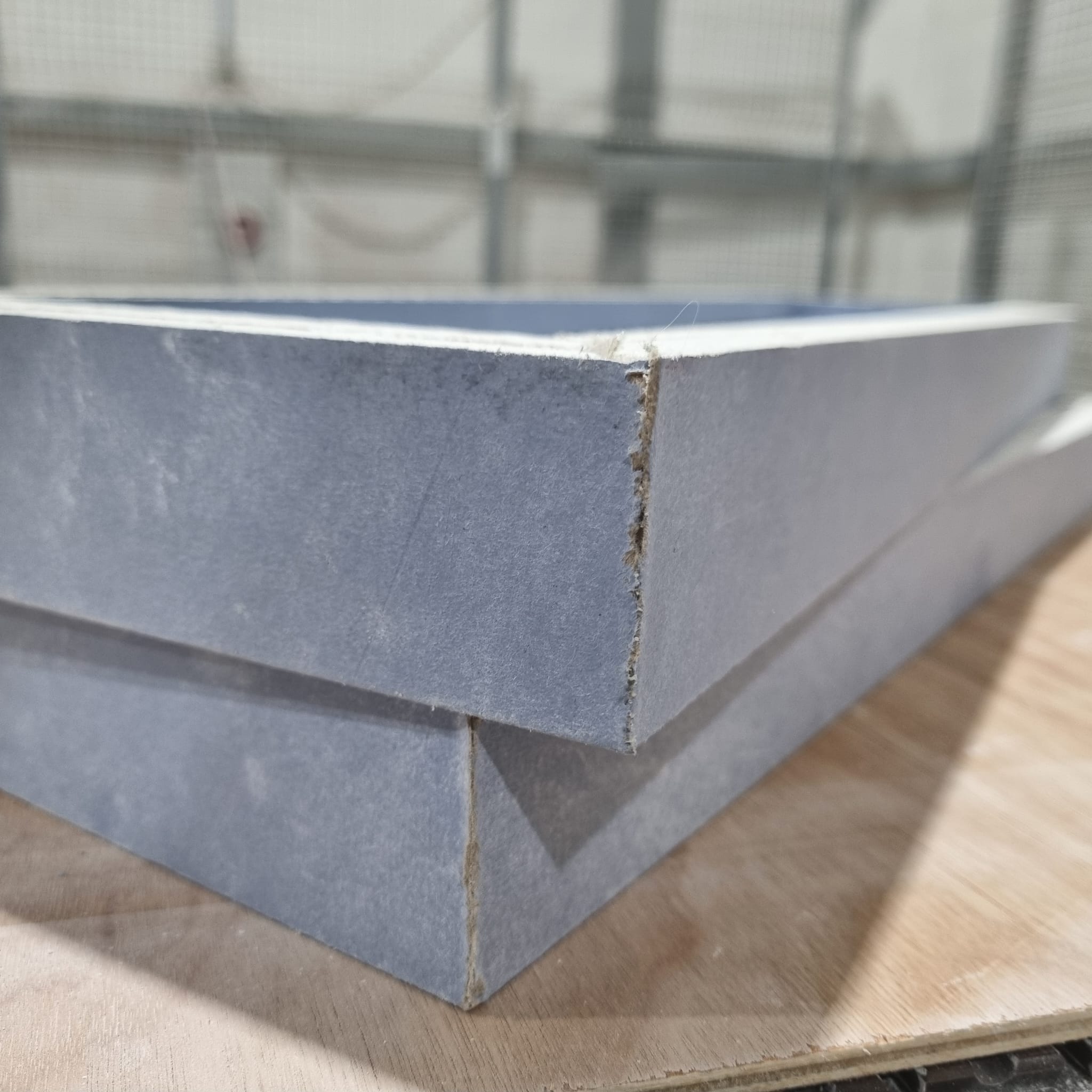
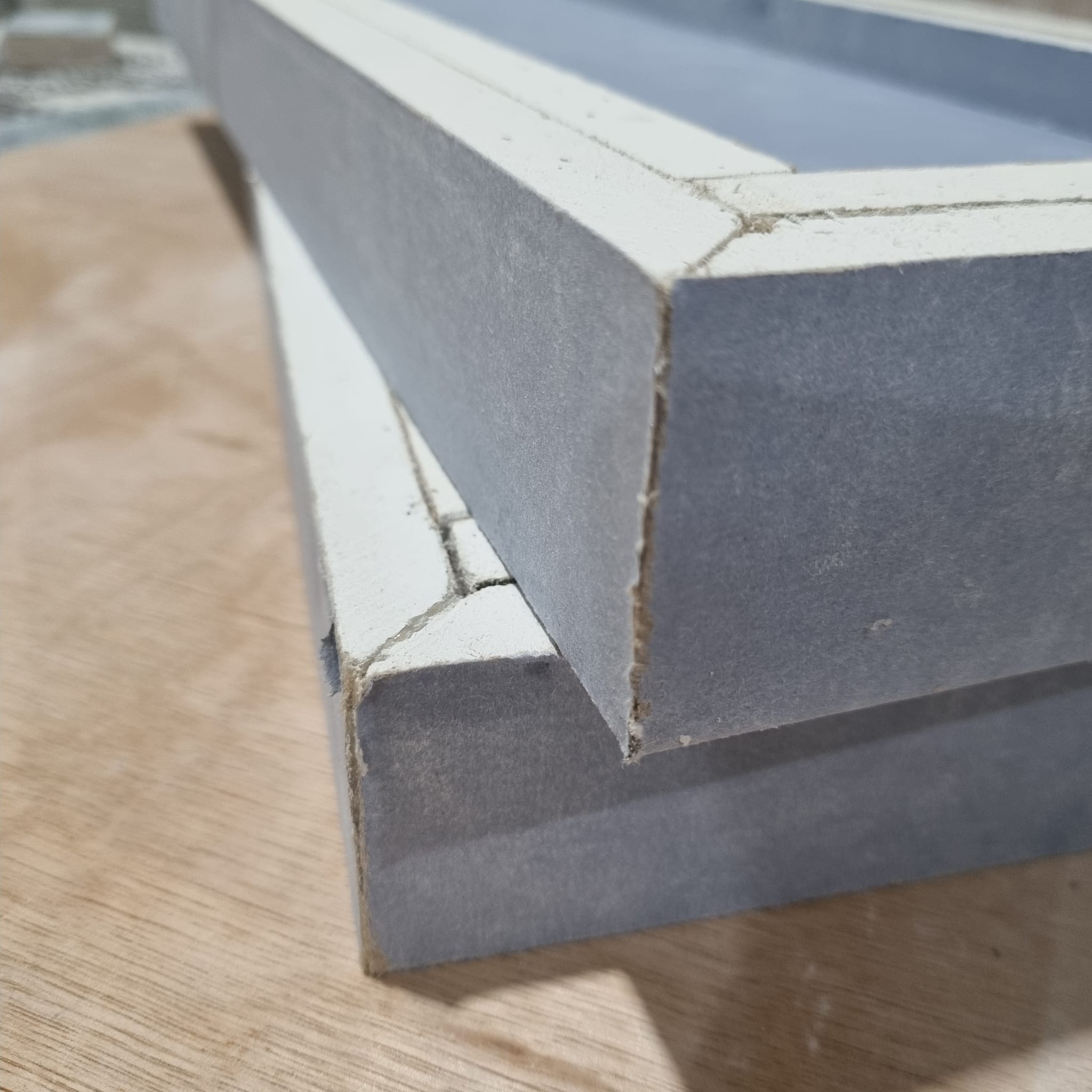
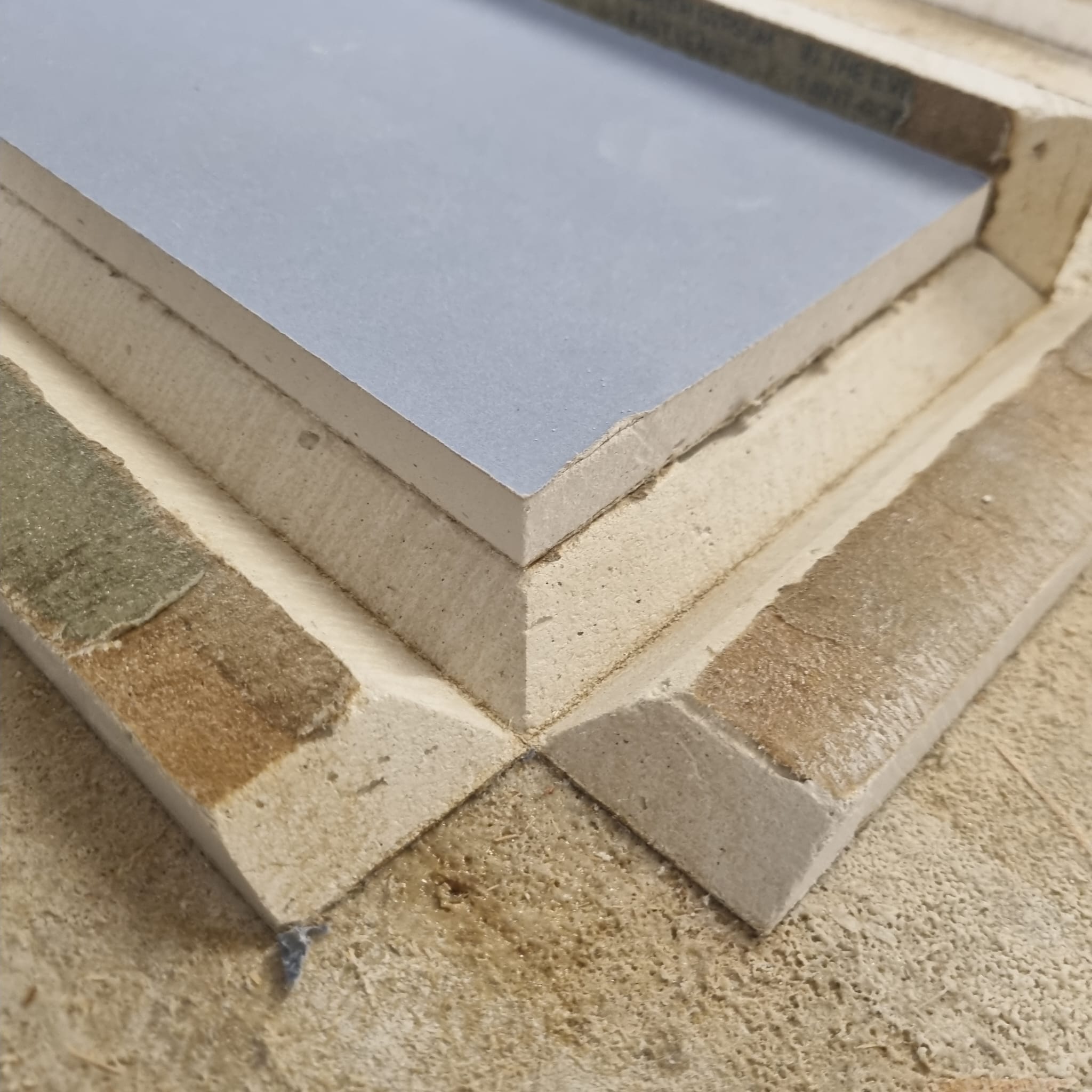
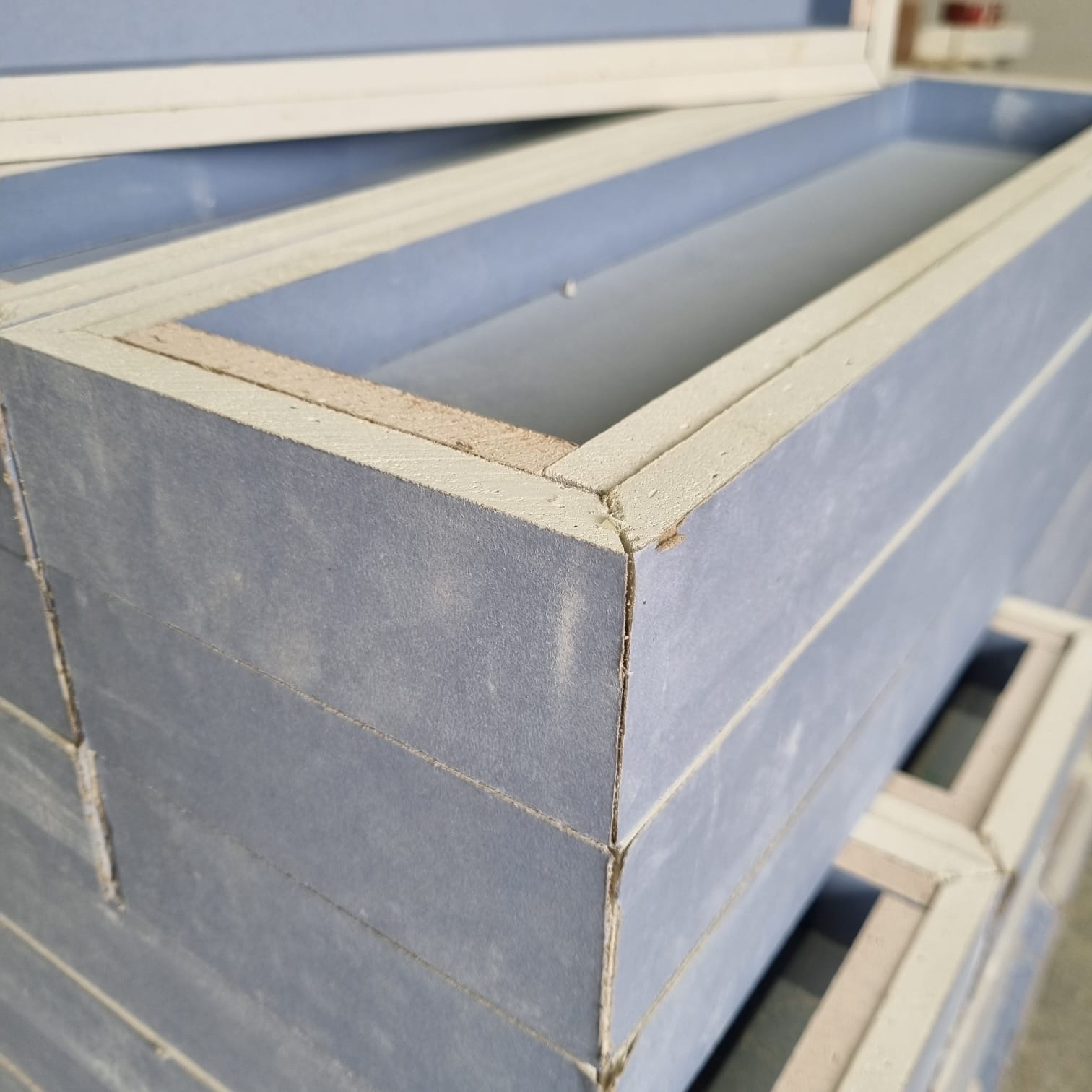
A baffle box is a pre-formed plasterboard enclosure used in drylining to house, contain, conceal or isolate services within a wall void, ceiling void or service zone.
Contractors use them around ductwork, fan coil units, air handling units, pipework, mechanical services and penetrations. The purpose depends on the project detail. It may relate to acoustic control, fire protection, service separation or simply forming a clean plasterboard enclosure around a service that needs boxing in.
The term covers a wide range of formed details. What they have in common is that they box in a service and form a plasterboard enclosure as part of the wider drylining package.
Where do contractors use baffle boxes?
Baffle boxes appear across a wide range of commercial and fit-out projects, including:
Offices.
Hotels.
Schools.
Hospitals.
Student accommodation.
Residential developments.
Commercial refurbishments.
Fit-out projects.
In ceiling voids, contractors use them around ductwork, fan coil units, air handling units and other mechanical services. Some projects specify them above suspended ceilings where services need separating from the occupied space below.
In wall build-ups, contractors use them where services, openings or penetrations need enclosing, separating or controlling as part of the wider drylining detail.
In service zones, contractors use them to create a formed plasterboard enclosure around mechanical and electrical services running through the building fabric.
The project specification drives the detail. The baffle box is the drylining solution that makes it work on site.
What boards are used in a baffle box?
The project specification decides the board. Not us.
You send us your board, drawings and specification. We cut, form, label and palletise the components so your site team can install them.
We work with whatever the project requires. That includes boards from:
British Gypsum.
Siniat.
Knauf.
Promat.
Or any other specified plasterboard or specialist board.
You keep your own board supplier, your own rates and your own rebates. We are not here to change your supply chain. We are here to support it.
If the detail needs acoustic performance, you send us the acoustic board. If it needs fire protection, you send us the fire-rated board. If it needs both, you send us both. We work with what the project specifies.
Why are baffle boxes slow to prepare on site?
This is the bit that gets overlooked.
One baffle box on site is not a problem. But 50, 100, 200 or 8,000 is a different conversation entirely.
Each box needs setting out, measuring, cutting, forming and checking before the team can install it. That takes time. On a live project, with limited space and programme pressure, that time adds up fast.
Then the process compounds.
Board offcuts build up. Repeated cutting wears through blades. Each cut adds dust to the work area. The mastic comes out. The team spends time fitting and adjusting rather than installing. Time disappears.
Add in the challenge of consistency. When the same detail repeats across dozens or hundreds of locations, small variations in how each box is set out and cut can lead to rework, more mastic and more time on site.
The problem is not the site team. The problem is the process.
Repetitive cutting, dust management, blade wear, board waste and programme pressure are process problems. Moving the preparation offsite removes them from site entirely.
A real example: 8,000 baffle boxes at Farringdon
On one project at Farringdon, SMG Contracts had 8,000 baffle boxes to deal with.
The site team could make them by hand, but each one took around 90 minutes. Across 8,000 units, that became a major labour and programme issue.
The challenge was not the skill of the team. The challenge was the process.
Each box needed setting out, cutting, forming and fitting. The work added dust to the area, wore through blades, generated board offcuts and put more pressure on the programme.
Innovate took the preparation offsite.
Innovate 3D modelled, CNC cut and prepared every baffle box in the factory. Each one was made to suit the required aperture, labelled and delivered ready for the site team to install.
The result was simple.
8,000 baffle boxes prepared offsite.
Around 90 minutes saved per unit compared with the on-site build.
A reported £600,000 returned to the client.
That is the real value of offsite preparation.
It is not about making a box look clever.
It is about helping the contractor get the job done faster, cleaner and with less waste.
How Innovate at SA helps
At Innovate at SA, we work as your offsite workshop.
You send us your board, drawings and specification. We cut, form, label and palletise the components so your team can install them on site.
You keep your own board supplier, your own rates and your own rebates. We are not here to change your supply chain. We are here to support it.
We have been preparing baffle boxes and plasterboard details offsite since 2008.
That is the simple offer.
Your board. Your job. Our cutting and preparation. Your team installs.
You keep control of the job. We take the repetitive preparation work off your programme.
Why contractors move baffle box preparation offsite
Contractors move this work offsite because it helps the job run better. Not because it sounds good on paper.
When baffle boxes arrive on site already cut, formed and labelled by floor, zone or area, the site team can focus on installation. The repetitive preparation work has already happened.
That means:
Reduce cutting on site.
Control dust more easily.
Keep board offcuts out of the skip.
Save blades on repetitive cuts.
Decreased use of mastic to make details work.
Avoid unnecessary rework.
Ease pressure on the programme
Improve consistency across repeated components.
Give the site team more time to install.
The saving is not only in the cutting. It is in the skip, the programme and the time your team gets back. Less board waste. Fewer offcuts. Less mastic. Fewer blades. Less dust to manage. Less rework. The job keeps moving, and your site team can focus on installation.
For office refurbishments and commercial fit-outs where programmes are tight and access is limited, this can make a real difference.
We cover each of these reasons in more detail in our guide on why contractors move baffle box preparation offsite.
Is offsite baffle box manufacture worth pricing?
If your project has a significant baffle box requirement, yes. It is worth putting offsite preparation alongside your site labour allowance and comparing the two properly.
The saving is not only what you cut from the labour allowance. It is what you stop putting in the skip, what you stop reworking, and the time you give back to the programme.
Compare offsite preparation against site labour, board waste, blade wear, dust management, rework and programme pressure. When you lay it out that way, the numbers often look different.
For many contractors, once they run the offsite option properly, they do not go back to cutting everything on site.
Speak to us about baffle box manufacture
If you have a project coming up with baffle boxes, speak to Innovate at SA.
Send us your board, drawings, schedule and specification. We can review the detail and show you what can sensibly move offsite.
Call 01279 216175 or visit our baffle boxes page to see how we work.
You can also learn more about our full plasterboard cutting service to see how we cut, form and prepare components offsite.
