

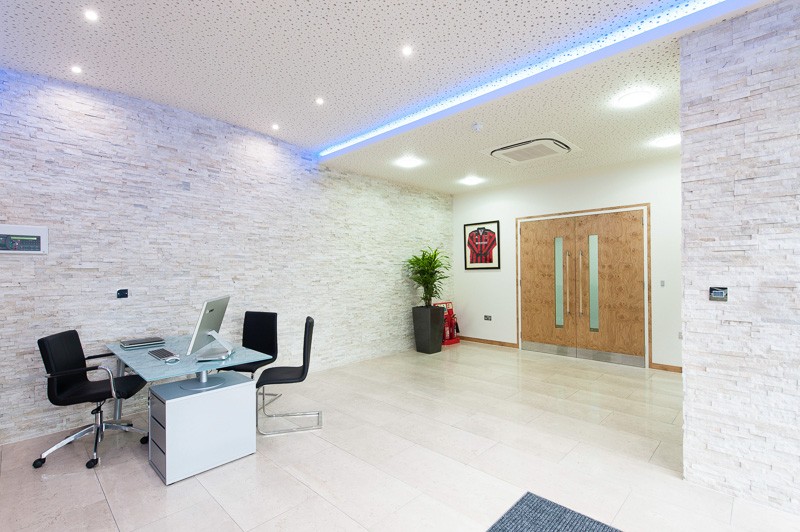
Integrated LED cove lighting can make a ceiling or wall detail look simple, clean and architectural.
But behind that clean line is a design detail that needs to be properly modelled, coordinated and manufactured.
A plasterboard cove is not just a lighting feature. It can affect ceiling buildability, acoustic performance, access, support, jointing, shadow lines and the final appearance of the space.
At Innovate at SA, we help drylining contractors, fit-out contractors and design teams move these details off site. We can take your drawings or DWG files, develop the detail through 3D modelling, then use CNC precision cutting to produce accurate, repeatable plasterboard components ready for site.
Innovate at SA takes plasterboard design details from drawings or DWG files, develops them through 3D modelling where required, then uses CNC precision cutting to produce accurate, repeatable plasterboard components ready for site.
The plasterboard detail is the product, not the LED lighting
It is important to separate the lighting package from the plasterboard detail.
Innovate at SA is not an electrical contractor and does not supply or install the LED lighting system. The value we bring is in the plasterboard geometry around the lighting.
That may include a cove, recess, return, bulkhead, curved section, shadow line or ceiling margin detail. These are the parts that often create problems on site when they are measured, cut and formed by hand.
By resolving the plasterboard component before it reaches site, the lighting design has a cleaner, more consistent architectural detail to work with.
This helps the drylining contractor reduce site cutting, improve repeatability and give the finished LED cove a better chance of looking straight, clean and intentional.
Why integrated LED cove details need careful planning
An integrated LED cove looks effortless when it works. The light washes cleanly across the ceiling, the shadow line is consistent and the finish looks intentional.
Getting there requires more than choosing the right LED strip. The plasterboard profile around the lighting has to be accurate, repeatable and properly coordinated with the ceiling build-up.
The depth of the cove affects how light distributes. The return affects shadow lines. The junction with the ceiling affects jointing, cracking risk and finish quality. Access for maintenance has to be considered. Acoustic performance may be a requirement that adds further constraints.
When this detail is formed by hand on site, inconsistencies are almost inevitable. Cove depths vary. Shadow lines shift. Boarding schedules change. Snagging increases.
From design detail to site-ready component
The important part of an integrated LED cove is not just the visible finish. It is the design detail behind it.
Before anything is cut, the plasterboard profile needs to be understood. The depth, return, fixing zones, LED position, access route and surrounding ceiling or wall build-up all need to work together.
That is where 3D modelling helps.
By modelling the detail before manufacture, we can check how the component is formed, how it connects to the surrounding build-up and how it can be repeated across rooms, corridors or floors.
Once the detail is resolved, CNC precision cutting allows the plasterboard components to be produced accurately and consistently. Each piece can be labelled by floor, zone, room or elevation, so the site team receives a clearer installation package.
This turns a hand-cut site detail into a controlled offsite component.
The problem with forming LED cove details on site
Site cutting of plasterboard cove profiles is time-consuming and inconsistent. Each operative measures and forms the component differently. Boards are cut by hand, wasting material, creating dust and taking time that should be spent on installation.
Small variations in cove depth or return angle affect the distribution of light. A cove that is 5mm shallower in one bay than the next will show in the finished lighting effect. Joints and junctions between cove sections become more visible where the geometry has drifted.
Rework and snagging on lighting details is expensive and disruptive. Offsite manufacture addresses these problems before the board reaches site.
How plasterboard shape affects the light
The geometry of the plasterboard cove directly affects how LED light behaves in the space.
The depth of the return determines how much of the LED strip is concealed and how far the light throws across the ceiling. The angle of the face affects whether the light source is visible from normal viewing positions. The surface quality of the plasterboard affects how light reflects and diffuses.
An accurately formed plasterboard component gives the lighting designer a consistent base to work from. An inconsistent cove profile created on site makes the final lighting result harder to predict and harder to control.
Acoustic considerations for plasterboard LED coves
Where acoustic performance is specified, the plasterboard ceiling build-up forms part of the acoustic system. Adding a cove detail can affect the performance of that system if it is not carefully coordinated.
The cove may interrupt a continuous ceiling membrane. It may create a junction that requires additional sealing or boarding. It may affect the mass of the ceiling assembly or the continuity of acoustic isolation.
These considerations need to be resolved at the design stage, before components are manufactured. Innovate at SA can support this process by developing the plasterboard detail in 3D, helping the design team check how the cove integrates with the wider ceiling system before cutting begins.
We do not certify acoustic performance. That remains the responsibility of the acoustic consultant, the specifier and the installing contractor. Our role is to manufacture the plasterboard component accurately to the agreed detail.
Structural considerations for plasterboard lighting details
A plasterboard LED cove must be properly supported. The weight of the board, the fixing centres and the span of the detail all affect how the finished cove performs over time.
Coves that are inadequately supported can deflect, crack at joints or pull away from adjacent surfaces. Where the cove spans between fixing points, the formed plasterboard profile needs to be stiff enough to hold its shape without distortion.
At Innovate at SA, we can form, fold and shape plasterboard components to match the agreed structural detail. We do not carry out structural calculations or certify the structural performance of the ceiling build-up. That remains the responsibility of the structural engineer and the project team.
Why offsite manufacture improves consistency
The biggest advantage of offsite plasterboard manufacture is that the design detail can be resolved before the board reaches site.
Through 3D modelling and CNC precision cutting, repeated plasterboard details can be manufactured with a level of accuracy that is difficult to achieve through hand cutting on site.
The same cove profile, return, curve, shadow line or lighting recess can be repeated across the project, helping the finished detail remain consistent from one area to the next.
Components are labelled by floor, zone, room or elevation. The site team receives a palletised kit that is ready to install, reducing the time spent on measuring, marking, cutting and sorting on site.
What Innovate at SA can produce
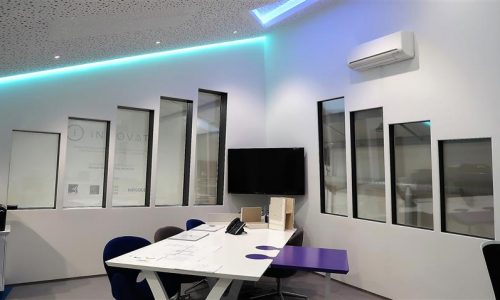
Depending on the design, Innovate at SA can support:
- 3D modelling of plasterboard design details
- CNC precision cutting from drawings or DWG files
- formed plasterboard LED cove profiles
- folded plasterboard lighting details
- curved plasterboard sections
- acoustic ceiling components
- bulkhead components
- ceiling margin details
- shadow gap lighting profiles
- labelled plasterboard kits
- bespoke board shapes for repeated design details
We work from your drawings or DWG files. Where the detail is not fully resolved, we can support the development of the plasterboard component through 3D modelling and bespoke manufacture.
Your board, your rates, our cutting
Innovate at SA does not supply plasterboard. You keep your existing board supplier, your merchant rates and your rebate arrangements. You send us the board. We cut, form, label and prepare it. You collect it or we deliver it ready for site.
This means there is no disruption to your existing supply chain. You stay in control of your materials. We add value through the cutting, forming and preparation process.
When to involve Innovate at SA
The earlier we are involved, the more useful we can be. If you bring the plasterboard detail to us at design stage, we can help develop the component before it is specified. If the detail is already resolved, we can take the drawings and move straight to manufacture.
We work with drylining contractors, fit-out contractors, ceiling contractors, architects and project teams across the UK.
You do not need to be a large contractor to use our service. If you have a detail that is worth getting right, we can help you manufacture it accurately and consistently.
A better way to deliver plasterboard LED cove details
Integrated LED cove lighting only looks clean when the plasterboard detail behind it is accurate.
Offsite manufacture reduces site cutting, dust, waste, setting-out errors, inconsistent cove depths, weak junctions and snagging.
If you have a plasterboard LED cove detail on your next project, send us your drawings. We will come back to you with a practical proposal for how we can help.
