Benefits of Using Preformed Plasterboard Bulkheads
Preformed plasterboard bulkheads take a detail that normally requires measuring, framing and cutting on site and turn it into a consistent, site-ready component.
A bulkhead can look like one simple line on a drawing. However, that line can create a surprising amount of work for the drylining team.
First, someone must set it out. Next, the team needs to frame it, measure the plasterboard, cut the individual pieces and assemble the detail. Then they must repeat the same process across every room, corridor or floor.
Instead, we move much of that work into our workshop. We manufacture the components in controlled conditions and deliver them ready for the installation team.
As a result, the project benefits from greater consistency, less cutting on site and a simpler installation process.
What is a preformed plasterboard bulkhead?
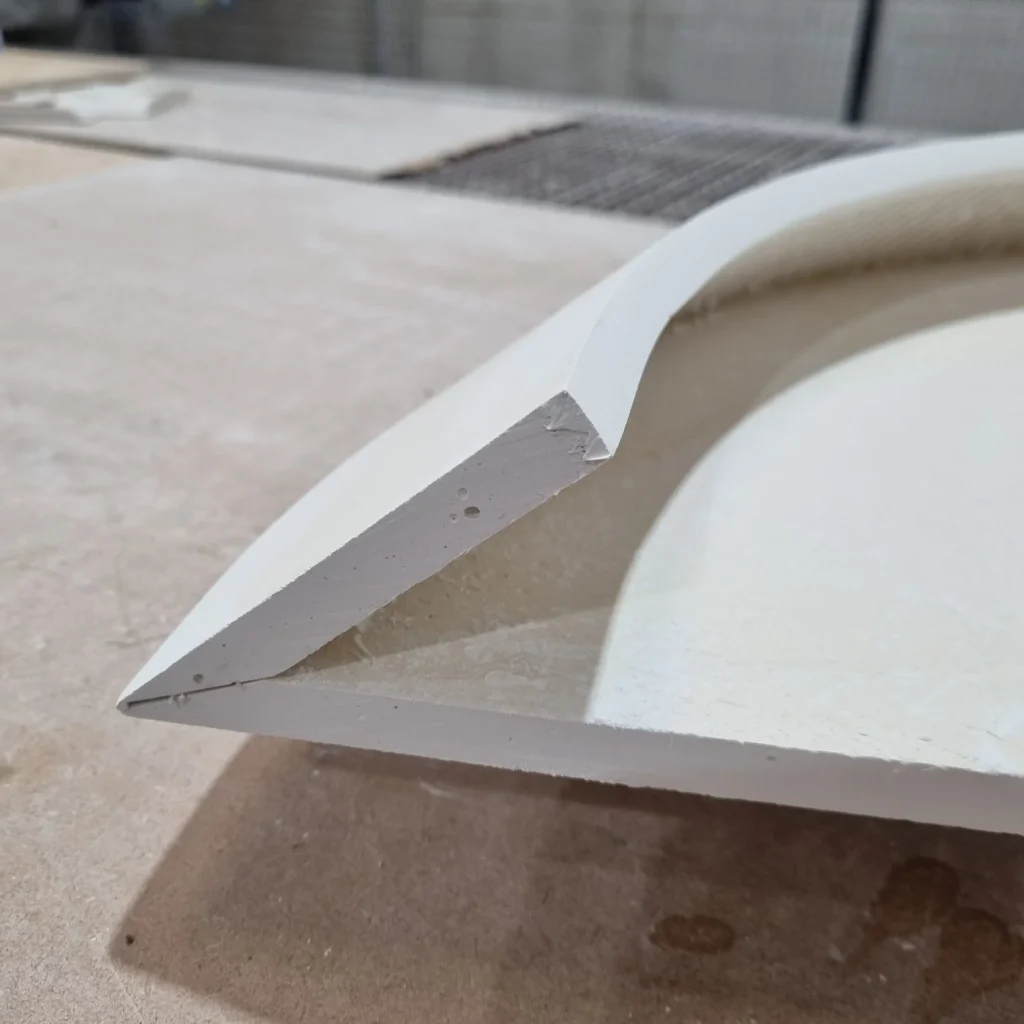
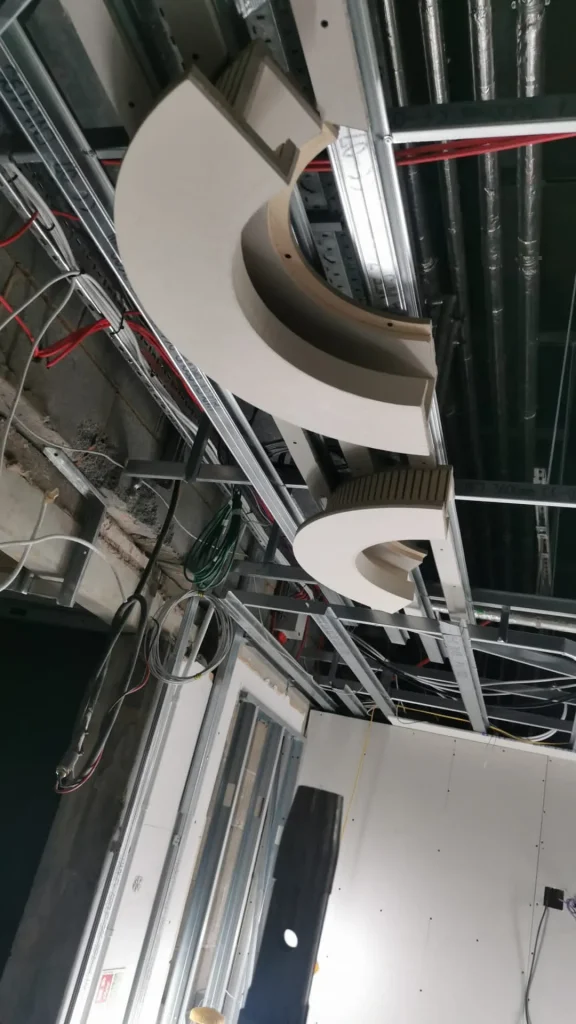
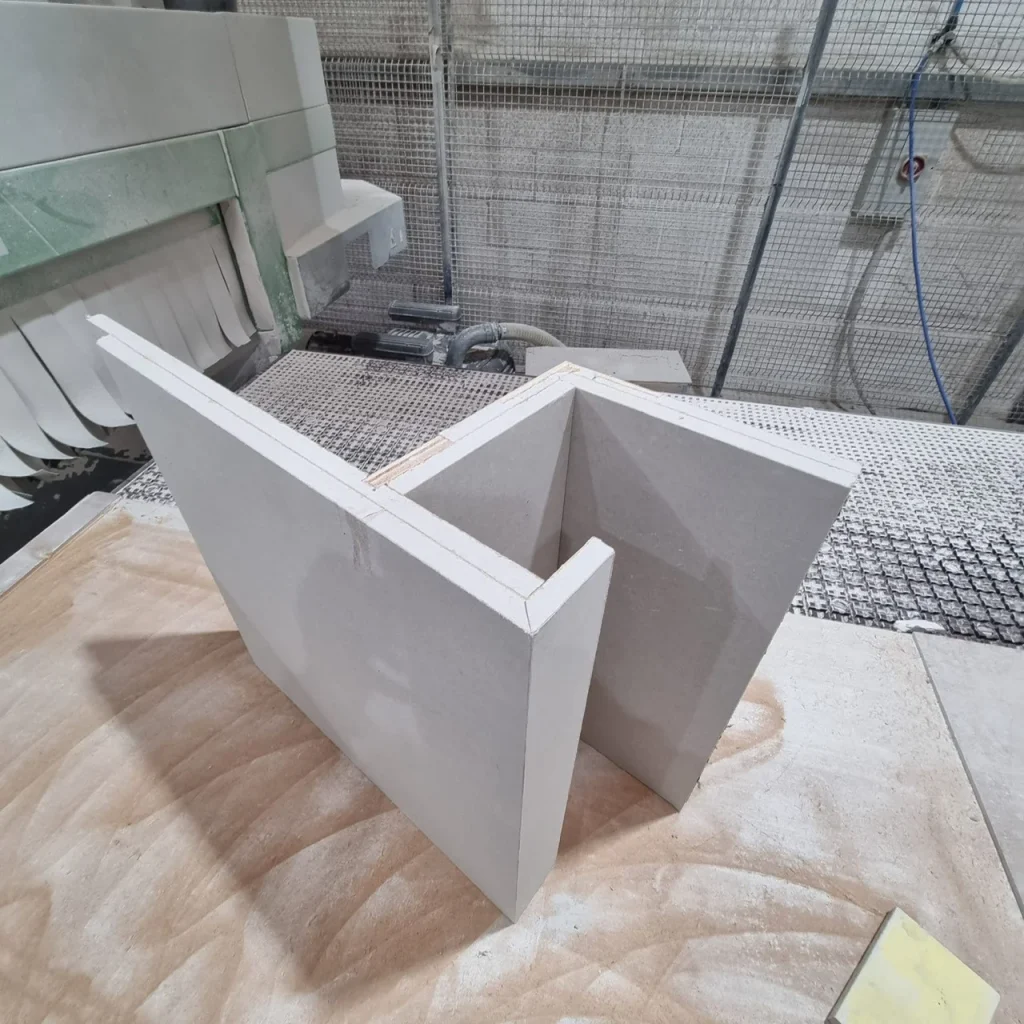
A preformed plasterboard bulkhead is a plasterboard component that we manufacture off-site from the project drawings and dimensions.
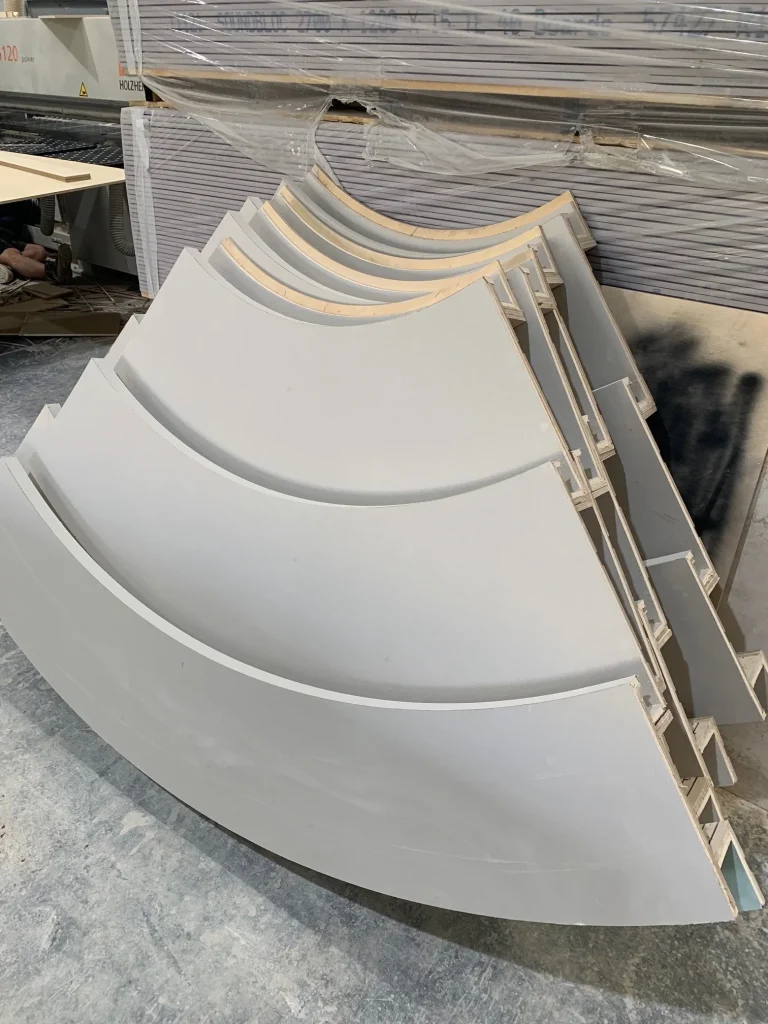
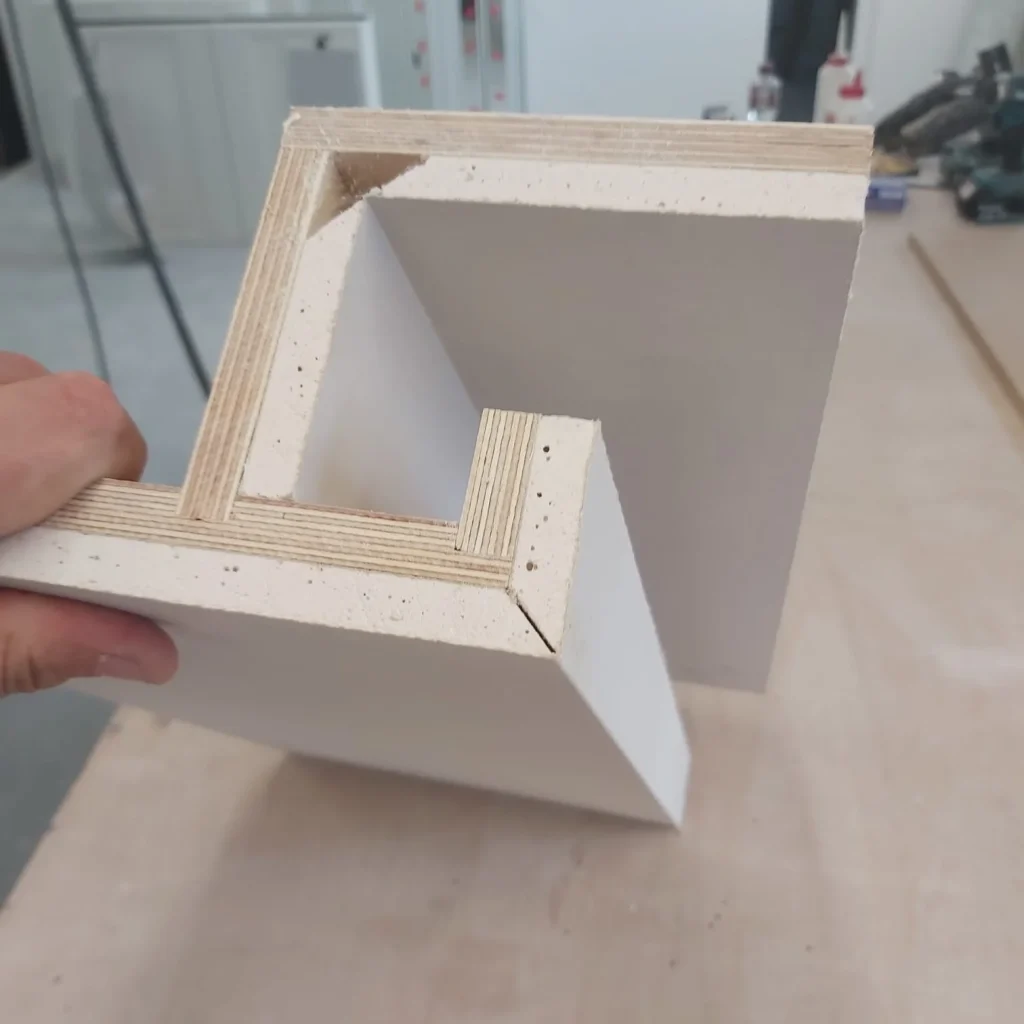
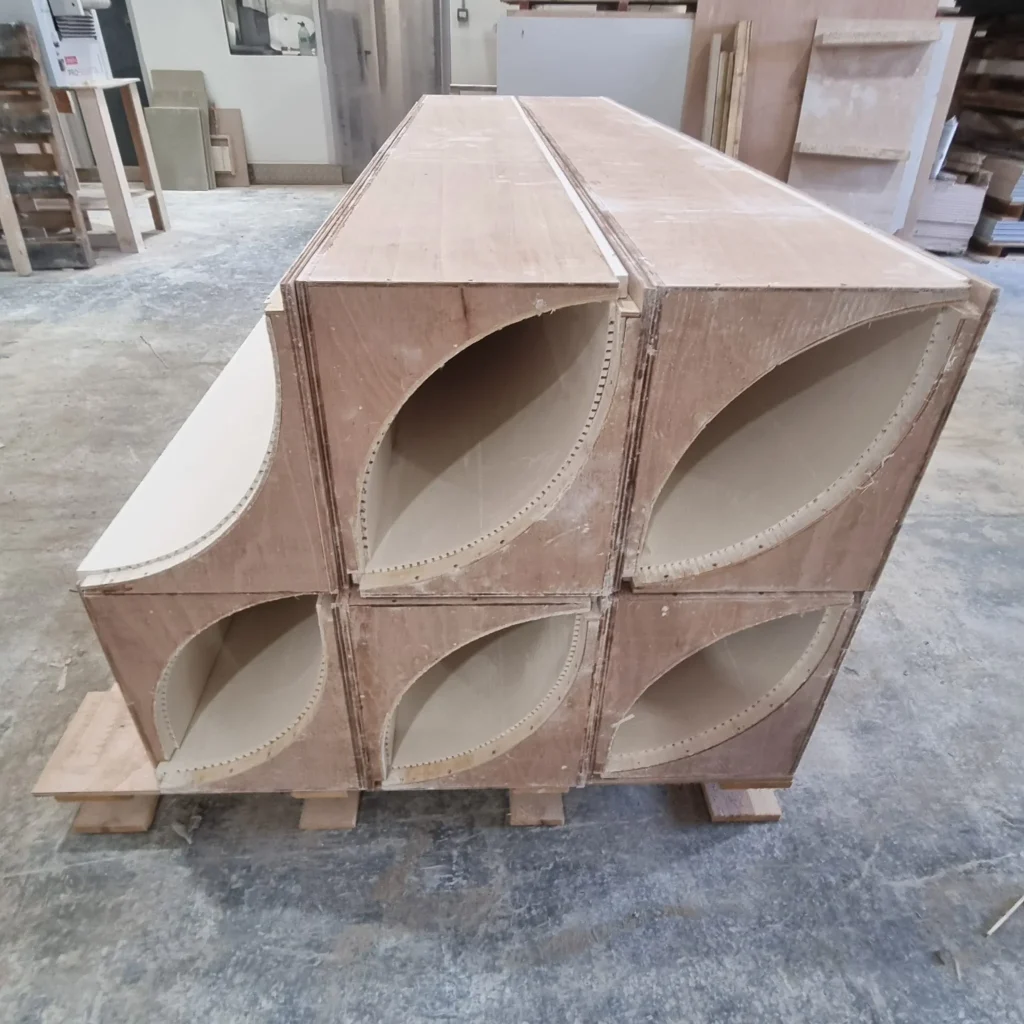
Our team uses CNC machinery to cut the plasterboard accurately. We then form and prepare each component before delivery. Depending on the design, the bulkhead may arrive as one complete component or as manageable, labelled sections.
Contractors use preformed bulkheads for:
- Straight and repetitive ceiling details
- Lighting features and ceiling coffers
- Service and ductwork enclosures
- Changes in ceiling level
- Perimeter details
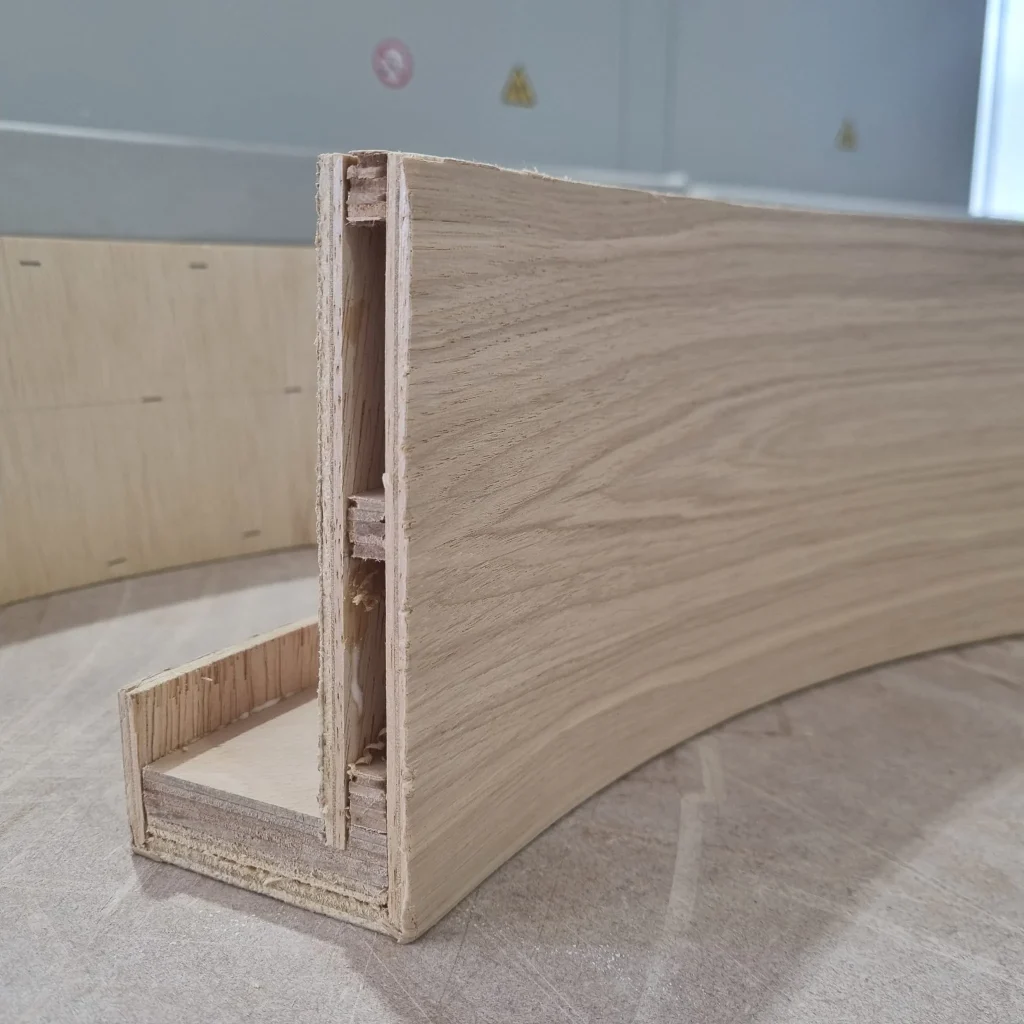
- Curved or unusually shaped features
- Bespoke architectural details
Every project has different requirements. Therefore, we can manufacture the components in various sizes, shapes and plasterboard types.
You can see more examples on our folded plasterboard solutions page.
How do preformed plasterboard bulkheads improve consistency?
When site teams build the same bulkhead repeatedly, the finished result can depend on who measures it, who cuts it and the conditions in which they work.
By contrast, our production team uses the same digital information throughout the manufacturing process. The CNC machinery follows the same dimensions for every repeated section.
Consequently, the installation team receives consistent components from one area of the project to the next.
This approach works particularly well for projects containing repeated bedrooms, apartments, corridors or room layouts. In addition, consistent components make setting out, installation and ordering easier to control.
Consistency is not only about appearance. It also helps the project team know what will arrive and how the components will fit together.
Are preformed plasterboard bulkheads quicker to install?
Yes. We complete much of the measuring, cutting and forming before the components reach site.
Instead of receiving full plasterboard sheets that still require measuring and cutting, the drylining team receives components prepared for the agreed detail.
This approach can reduce:
- Setting-out time
- Repetitive measuring and cutting
- The number of separate pieces to assemble
- Plasterboard dust and offcuts
- Reliance on site-made templates
- Disruption to surrounding trades
However, the exact time saving depends on the design, quantity, access and installation sequence.
A small, one-off bulkhead may not justify off-site manufacture. On the other hand, a project containing dozens of repeated or awkward details can gain a significant advantage.
The greater the repetition, the greater the opportunity to save site time.
How do we make the bulkheads easier to install?
We consider the installation process from the beginning.
A component must do more than look right when it leaves our workshop. It must also travel safely, move through the building and fit into the planned location.
Therefore, we consider:
- Component size and weight
- Site access
- Lifting restrictions
- Delivery sequence
- Joint positions
- How the sections connect
- The order of installation
Where appropriate, we test-fit the sections in our workshop. After that, we label and prepare them for delivery.
This practical check confirms that the individual sections fit together and that the proposed installation method makes sense. However, it does not represent a fire or performance test.
Clear communication also matters. For example, the drawing may not show that the building has no lift, that the component must pass through a narrow opening or that the site needs several small deliveries.
If we know those restrictions early, we can design the manufacturing and delivery package around them.
Do preformed bulkheads make better use of plasterboard?
They can, particularly when a project requires several repeated components.
Our CNC cutting service allows us to nest multiple components efficiently across each plasterboard sheet. Good nesting uses more of the available board and reduces unnecessary offcuts.
In addition, off-site manufacture moves much of the cutting, dust and waste away from the project.
Customers can also retain their negotiated plasterboard rates. They can arrange for their chosen supplier to deliver the board directly to us for manufacturing.
Your board. Your rates. Our cutting.
What information do we need before manufacturing a bulkhead?
We need accurate drawings, dimensions and details of the plasterboard specification.
Ideally, the information should include:
- Overall dimensions
- Angles and radiuses
- Board type and thickness
- Repeated quantities
- Joint locations
- Lighting or service requirements
- Fixing and installation considerations
- Access, lifting or delivery restrictions
Nevertheless, drawings cannot always tell the whole story.
For instance, a drawing may show the correct dimensions but not the route through the building. Likewise, it may not identify a restricted delivery area or the need to finish the component against existing work.
The earlier we receive this information, the more effectively we can plan the manufacture, packaging and delivery.
If anyone doubts a dimension or site condition, we can produce a template for the installation team to check on site. Once the team confirms the template, we can proceed with the full manufacturing run.
That small check can prevent one uncertainty from becoming a repeated problem.
When should you use a preformed plasterboard bulkhead?
Preformed plasterboard bulkheads work particularly well when a project includes:
- Repetitive details
- Tight programmes
- Limited space for cutting
- Complex shapes or angles
- Consistent finished dimensions
- A need to reduce dust and waste
- Limited availability of skilled site labour
However, off-site manufacture will not suit every bulkhead.
For example, a drylining team may form a small, straightforward, one-off detail more quickly on site. By comparison, a repetitive, awkward or labour-heavy detail creates a much stronger case for off-site manufacture.
Therefore, we look at the drawing, quantities and installation conditions before recommending an approach.
From drawing to site-ready component
Off-site manufacturing should make a plasterboard detail simpler, not more complicated.
We take work that would normally happen in difficult site conditions and complete it in a controlled workshop environment. Our team cuts the board accurately, checks the practical installation and prepares the components for delivery.
As a result, the drylining team can spend less time measuring and cutting and more time installing.
Have a bulkhead detail you are pricing?
Send us the drawing before the work reaches site.
We will review the shape, quantities, board usage, access and installation requirements. Then we will explain whether the detail offers a good opportunity for off-site manufacture.
We turn plasterboard into site-ready solutions.
Lorem ipsum dolor sit amet, consectetur adipiscing elit. Ut elit tellus, luctus nec ullamcorper mattis, pulvinar dapibus leo.